
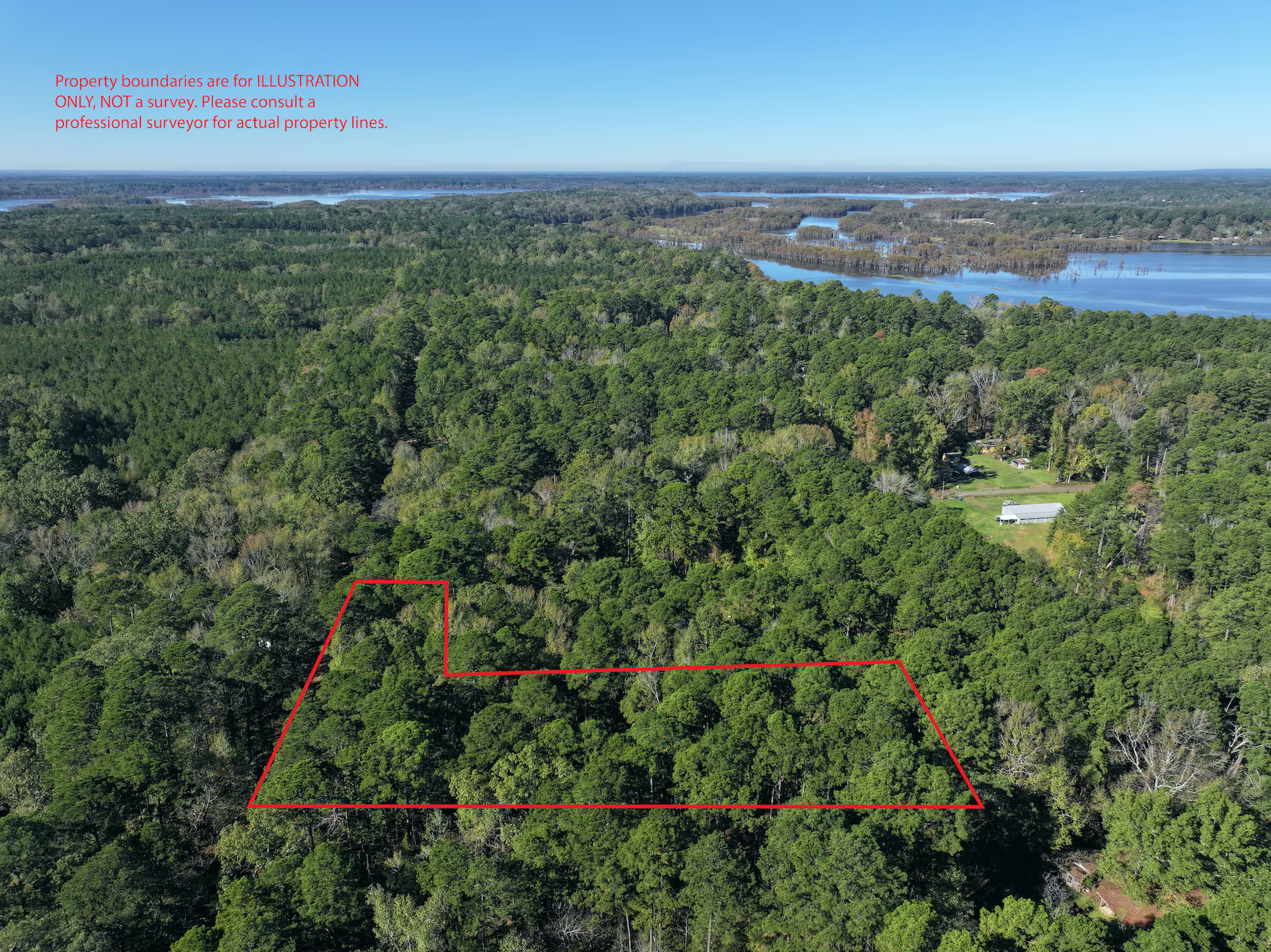
Selling rural or vacant land in Kansas doesn’t have to be a prolonged ordeal filled with uncertainty. If you’re a landowner seeking a faster, simpler exit strategy, the option to sell land for cash is compelling and increasingly common. In this article, we’ll discuss why many Kansas landowners choose this route, how the process works, what you should beware of, and tips for maximizing your outcome.
Why Many Landowners Choose to Sell Land for Cash
Owning land can be rewarding, but it also carries ongoing costs and risks. These are some of the common motivations for sellers to seek a cash transaction:
- Carrying costs: Property taxes, insurance, maintenance, and sometimes state or local assessments can add up—especially when the land is not producing any income.
- Inconvenience or inaccessibility: Many parcels are remote, lack road frontage, or have access challenges. These traits reduce demand in the open market.
- Need for liquidity: Some owners need quick cash due to relocation, financial pressures, or desire to reinvest elsewhere.
- Inherited land or unwanted plots: It’s common for people to inherit rural tracts they have no use for or capacity to manage.
- Market conditions & uncertainty: In a slow market, waiting for a perfect buyer may take months or years.
By choosing to sell land for cash, landowners trade some of the potential upside for speed, certainty, and simplicity.
What “Sell Land for Cash” Means in Practice
When you see a buyer promoting the ability to sell land for cash, that typically signals that:
- They have ready funds (or financing) to purchase land without relying on mortgage approvals
- They are prepared to purchase “as-is,” meaning minimal demands for repairs, clearing, or improvements
- They aim to streamline due diligence, title work, and closing procedures
- They often prioritize speed and certainty of closing over chasing the highest possible price
In Kansas, companies like Land Boss offer that kind of pathway: you submit property details, they evaluate, make you a cash offer, and if accepted, aim to close quickly—sometimes within days. Their pitch emphasizes that vacant, raw, rural, or otherwise challenging parcels can still sell under this model. (This is exactly how many “sell land for cash in Kansas” services present their offering.)
How the Cash Land Sale Process Generally Works
Here’s a step-by-step outline to give you a realistic sense of how a cash‐based land transaction might unfold:
- Submit Property Details
You provide the buyer with basic information: county, acreage, legal description (if known), access, utilities (if any), tax status, known issues (liens, back taxes, easements). - Preliminary Evaluation
The buyer uses comparable sales, tract maps, title abstracts, GIS data, and any photos or drone images you provide to form a preliminary value estimate. - Offer Presentation
You receive a written cash offer (often lower than retail market value, reflecting risk and cost assumed by the buyer). The offer usually states closing timeline, responsibilities (who pays closing costs, title work, etc.), and contingencies. - Due Diligence / Title Work
The buyer (or a title company) verifies title, checks for liens or encumbrances, confirms access and boundaries, and secures any needed municipal or county records. - Contract Signing & Closing Logistics
Contracts are drawn, reviewed, and signed (many cash buyers use mobile notaries or local title firms). You may need to provide proof of identity, deed documents, and a tax clearance if required. - Closing & Cash Payment
On the agreed closing date, funds are disbursed (often via wire or check), and the property title transfers to the buyer.
Overall, this process can be completed in a matter of days or a few weeks—significantly faster than conventional real estate deals that depend on buyer financing.
Advantages & Trade-Offs of Selling Land for Cash
Advantages
- Speed: Because there’s no buyer mortgage underwriting, the process is faster and less prone to delays.
- Certainty: Cash offers reduce the risk of deals collapsing due to financing issues.
- Simplicity: You typically avoid extensive negotiations, inspections, or repair demands.
- Lower costs: Fewer commissions, less marketing, less escrow or financing expense to you.
- Flexibility: Cash buyers often let you choose your closing date, making transitions smoother.
Trade-Offs & Risks
- Lower price: The price you get will often be below full retail value because the buyer must offset risk, carrying costs, and potential resale effort.
- Transparency risk: Some buyers may not fully disclose how they arrived at their offer or hide fees.
- Title problems & liens: If your property has unresolved legal issues, the buyer may push for discounts or refuse purchase unless problems are cleared first.
- Buyer reliability: Because many cash buyers operate remotely, it’s critical to vet their reputation and legitimacy.
- Limited market competition: You forego the chance of getting multiple competing bidders through traditional listing methods.
To mitigate risks, always request a clear breakdown, insist on title review, and if possible get multiple cash offers for comparison.
Tips to Maximize Value & Ensure a Smooth Sale
Even when pursuing a cash sale, there are strategic steps you can take to improve your position:
- Gather complete documentation up front: Tax records, surveys, plat maps, prior title documents, and any easement or boundary records. Having everything ready accelerates due diligence and builds buyer confidence.
- Highlight positive features: Proximity to paved roads, utility availability, favorable zoning, or developmental potential can boost perceived value—even to a cash buyer.
- Get at least two offers: Having multiple cash offers forces buyers to be competitive and gives you leverage during negotiation.
- Ask for a breakdown of their offer: Understand adjustments for access, condition, or title risk. A transparent buyer should explain their deductions.
- Negotiate flexible closing terms: If you need time to move or finalize other affairs, a flexible closing date is a valuable concession.
- Retain a contingency on clear title: Insist the offer be contingent on successful title examination or removal of known liens.
- Use a neutral third party: Having a title company or real estate attorney participate helps ensure the transaction is clean, legal, and fair.
Why Cash Buyers Target Kansas Land
Kansas is particularly well suited for cash land acquisition models for several reasons:
- Large rural tracts: Many parcels are remote, agricultural, or undeveloped, which tend to appeal to investors and speculators.
- Diverse county coverage: Buyers often list dozens of counties where they will purchase land—regardless of whether properties have road frontage or utilities.
- Less competition: Many Kansas parcels are overlooked by conventional realtors, leaving room for specialized cash buyers to step in.
- Predictable tax structure: Kansas county tax systems and land use rules are stable enough that buyers can estimate holding costs reasonably.
- Resale potential: Investors may subdivide, rezone, or package land portfolios for resale, creating upside for them.
Because of these factors, companies focused on “sell land for cash in Kansas” are able to target parcels that traditional buyers might ignore and still justify the discount they apply.
What to Watch Out For—Red Flags & Best Practices
When you engage with a buyer offering to buy your Kansas land for cash, keep an eye out for:
- Offers that seem outrageously low with no explanation
- Buyers unwilling to talk through or disclose their assumptions
- Contracts that allow them to back out without penalty or require you to pay costs
- Surge in “paperwork fees,” “research charges,” or other hidden line items
- Lack of transparency on how title work or liens will be handled
- No proof of past deals or references
Always ask for references or testimonials, check local county records when possible for prior deals, and require that all fees or deductions be spelled out clearly in writing.
Realistic Example: How a Kansas Cash Deal Might Play Out
Suppose you own a 20-acre parcel in a rural county of Kansas. You’ve been paying property taxes but no longer have the time to manage it. You contact a cash buyer offering to let you sell land for cash in Kansas.
- You submit the parcel data: size, location, any map or survey, access notes, tax status.
- The buyer evaluates remotely and returns an offer in two days. The offer is somewhat lower than your ideal, but acceptable given speed.
- You compare it to one more offer and decide to accept.
- The buyer initiates title review, confirms there are no major encumbrances, and arranges for a mobile notary.
- On a mutually agreed date, you sign the documents and receive the cash payment. You are freed of the parcel, taxes, and ongoing costs.
The total transaction—from initial contact to closing—takes maybe 10 to 14 days. That’s far faster and less uncertain than listing, marketing, showing, and waiting for a financed buyer.
Final Thoughts
Selling rural or vacant land in Kansas through conventional real estate methods can be time-intensive and unpredictable. If your priority is speed, certainty, and ease, choosing to sell land for cash offers a compelling alternative. Although you’ll likely accept a discount to market value, you trade that variance for immediacy and reduced risk.
Before committing, do your due diligence: get competing offers, request transparent breakdowns, use a title company or attorney, and carefully review contracts. When executed properly, a cash land sale can turn a dormant asset into liquidity—quickly, cleanly, and with minimal headache.
If you’re ready to explore this route for your Kansas land, get your details together and solicit a few cash offers. You may find it’s the fastest path out of a property you no longer wish to hold—and a firm step toward your next financial move.